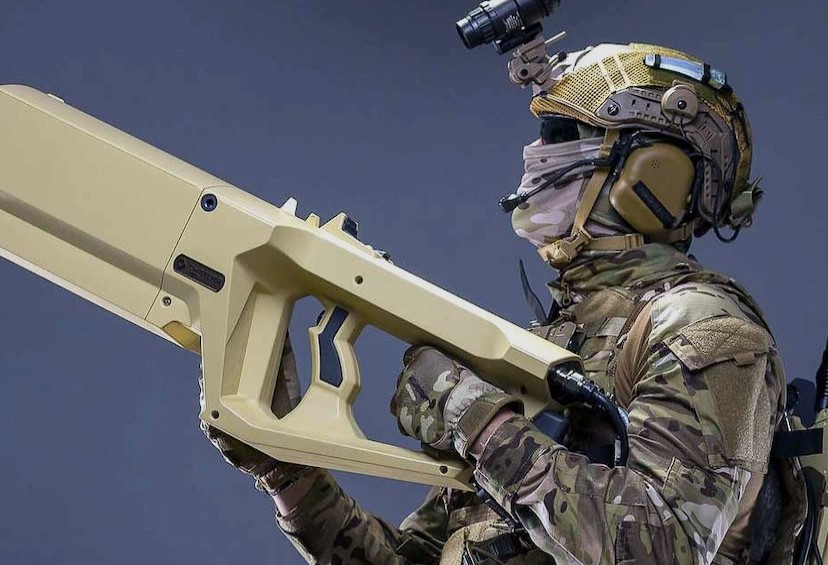
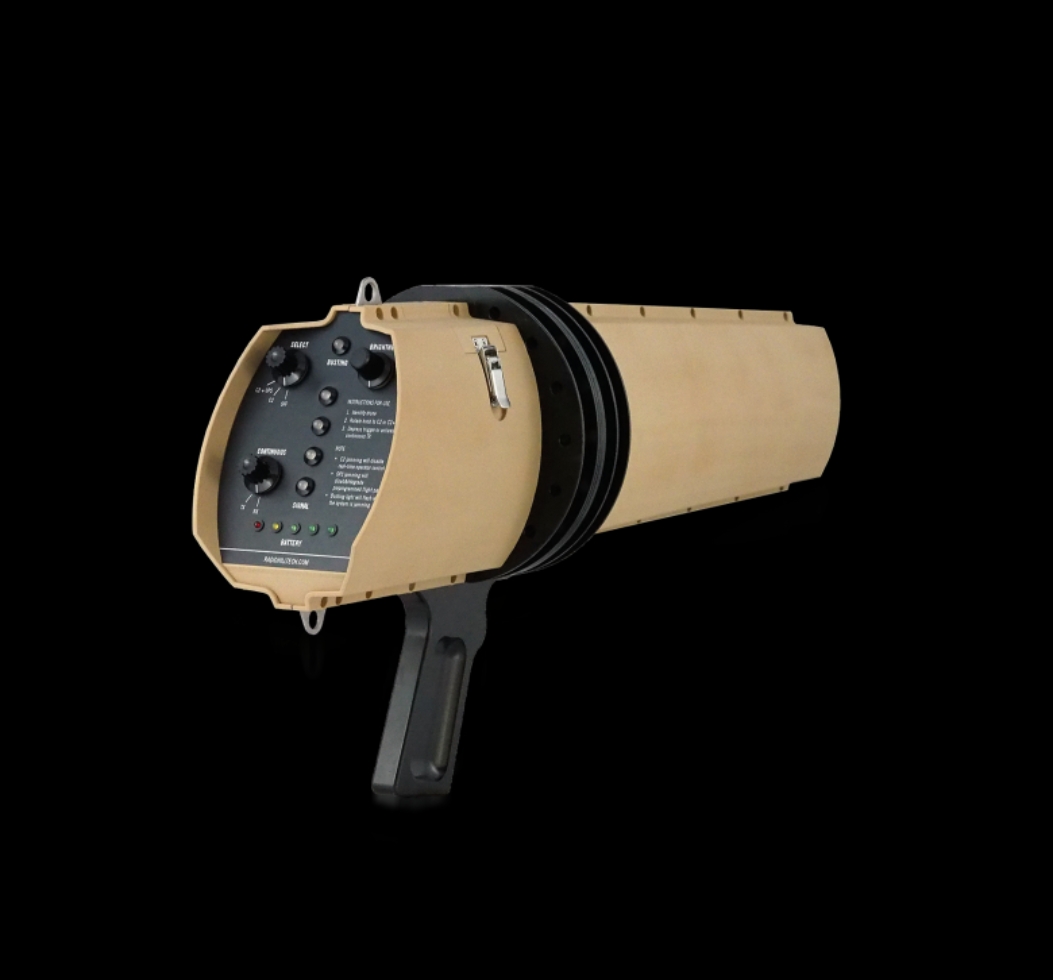
An Anti-Drone Gun is a portable counter-unmanned aerial system (C-UAS) designed to detect, disrupt, and neutralize unauthorized drones operating in restricted or sensitive areas. It is shaped similarly to a rifle for ease of handling and directional targeting, but instead of firing physical ammunition, it emits high-power radio frequency (RF) jamming signals toward the drone. These signals interfere with the communication link between the drone and its remote controller, as well as disrupt satellite navigation systems such as GPS, GLONASS, Galileo, and BeiDou. Once the signal link is broken, the drone may either hover in place, return to its home location, or perform an emergency landing, depending on its programmed fail-safe behavior.
Anti-drone guns are widely used in defense installations, airports, government premises, industrial plants, VIP security zones, correctional facilities, and border surveillance operations where unauthorized drones can pose threats related to espionage, smuggling, surveillance, terrorism, or disruption of operations. The system offers a non-kinetic neutralization method, meaning it disables the drone electronically without causing an explosion or using conventional weapons. This makes it especially useful in urban or populated environments where a safe and controlled response is required. Its directional design allows security personnel to focus the jamming beam only on the target drone, reducing unnecessary interference to nearby communication systems.
Modern anti-drone guns are engineered with multi-band jamming capability, allowing them to simultaneously block the most commonly used drone control frequencies such as 2.4 GHz, 5.8 GHz, 433 MHz, 868 MHz, and 915 MHz, depending on the model and mission requirement. In addition, they can jam satellite navigation frequencies like GPS L1 / L2 to prevent the drone from maintaining accurate positioning. Many systems are lightweight, battery-operated, and built for field deployment, with ergonomic design, quick activation, and simple trigger-based operation. Advanced variants may include integrated optical sighting systems, laser pointers, battery status indicators, detachable antennas, and modular frequency configurations to suit different operational environments.
The effectiveness of an anti-drone gun depends on factors such as drone type, antenna gain, line of sight, terrain, weather conditions, transmission power of the drone, and surrounding RF environment. Typical engagement ranges vary from 500 meters to 2 kilometers or more, with high-end military systems offering even longer disruption distances. Because anti-drone guns intentionally interfere with radio communications, their deployment is usually restricted to authorized government, defense, police, and certified security agencies, and must comply with national telecom and spectrum regulations. Overall, the anti-drone gun is an essential modern security solution for countering low-altitude aerial threats quickly, safely, and efficiently.
| Product Name | Anti-Drone Gun / Portable Counter Drone Jammer |
| System Type | Handheld / Shoulder-Fired RF Drone Neutralization System |
| Purpose | Detection disruption and neutralization of unauthorized UAVs / drones |
| Operating Principle | Directional RF jamming of drone control, video transmission, and GNSS navigation signals |
| Target Platforms | Commercial quadcopters, hexacopters, fixed-wing drones, surveillance UAVs |
| Jamming Method | Non-kinetic electromagnetic interference / signal denial |
| Control Frequency Bands Jammed | 433 MHz / 868 MHz / 915 MHz / 1.2 GHz / 2.4 GHz / 5.2 GHz / 5.8 GHz (as per configuration) |
| Navigation Frequency Jamming | GPS L1, GPS L2, GLONASS, Galileo, BeiDou (model dependent) |
| Effective Range | 500 m to 2000 m (depending on environment and model) |
| Jamming Direction | Directional / focused beam |
| Beam Width | Typically 15° to 45° (depends on antenna design) |
| Response Time | Less than 3 seconds |
| Drone Reaction After Jamming | Return-to-home / hover / forced landing / loss of control |
| Output Power | 10 W to 100 W total RF output (depends on model) |
| Number of Simultaneous Bands | 3 to 8 bands |
| Power Supply | Rechargeable lithium-ion battery |
| Battery Backup | Approx. 30 min to 2 hrs continuous operation |
| Charging Time | 2 to 4 hours |
| Weapon Form Factor | Rifle-style ergonomic handheld body |
| Weight | Approx. 3.5 kg to 8 kg |
| Material / Housing | High-strength polymer / aluminum alloy / rugged military-grade enclosure |
| Display / Indicators | Battery indicator, frequency mode indicator, power status LED |
| Aiming System | Optical sight / reflex sight / laser pointer (optional) |
| Activation Method | Trigger-based or push-button controlled |
| Cooling Method | Passive / active air cooling depending on output power |
| Operating Temperature | -20°C to +55°C (typical) |
| Storage Temperature | -30°C to +70°C |
| Ingress Protection | IP54 / IP65 (depending on model) |
| Deployment Type | Handheld / vehicle-mounted compatible / tripod supported (optional in some systems) |
| Safety Features | Overheat protection, battery protection, frequency isolation, low-battery alert |
| Use Cases | Military bases, airports, VIP security, prisons, border control, critical infrastructure |
| Compliance | Subject to national RF, defense, and telecom regulations |
| Optional Features | Interchangeable antennas, integrated drone detector, camera sight, night-use optics, backpack battery support |